
How to Prepare Your Dog for Their First Day at Daycare
Most of what determines whether a dog's first daycare experience goes well happens before they arrive. The facility plays a large role, but so does how the guardian approaches the transition, and most of the common advice guardians receive is either incomplete or actively unhelpful.
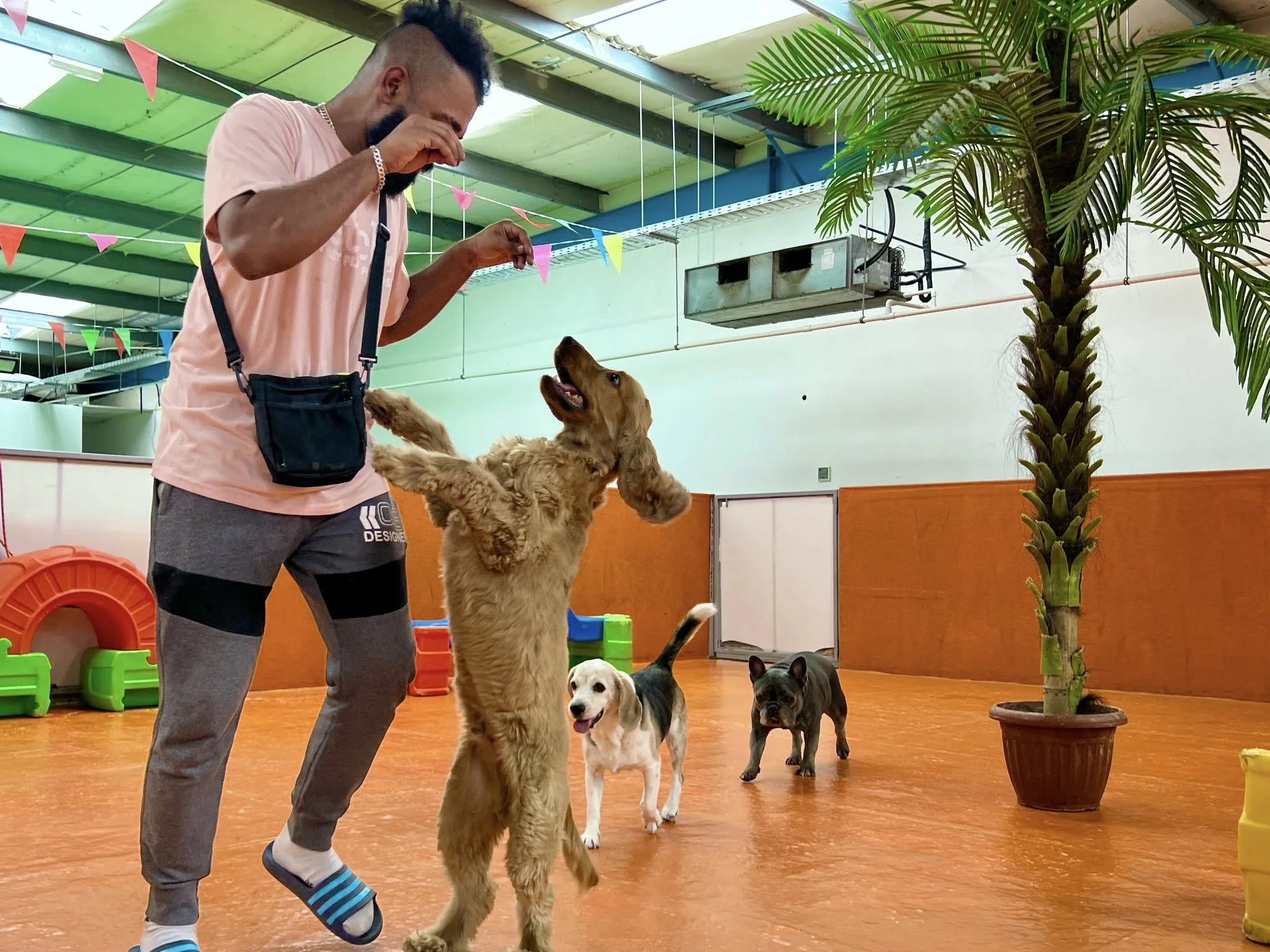
Start before the first visit
If the daycare offers any kind of pre-visit or acclimatisation process, take it seriously. A dog who has already been to the facility, smelled it, seen staff, spent short periods there without pressure, will experience their first full day differently from a dog arriving cold into an unfamiliar environment.
Beerda et al. (2000) documented measurable stress responses in dogs encountering novel environments with unpredictable social demands. The solution is not to avoid the new environment but to reduce its novelty incrementally. Each prior visit reduces the unknown.
If the facility does not offer a gradual introduction process, ask about it. A facility that books dogs straight into full days from day one has prioritised convenience over welfare.
A caveat worth noting: short introductions, 30-minute trial visits are common in the UAE, are not the same as genuine acclimatisation. In a 30-minute window, a new dog will almost certainly be moved straight into the group, with no time to adjust to the space before social demands begin. That is closer to a sink-or-swim approach than gradual introduction, In other words Flooding, a terrible, but ignorantly common approach.
It also signals something about how the facility operates day-to-day. In a well-regulated environment, staff understand that the first 20 to 30 minutes after any new dog enters the group are typically the most unsettled period. No facility focused on keeping dogs regulated would consider that window a useful basis for assessment, or a meaningful introduction. A genuine process gives the dog time in the space before the group, not time in the group as the introduction.
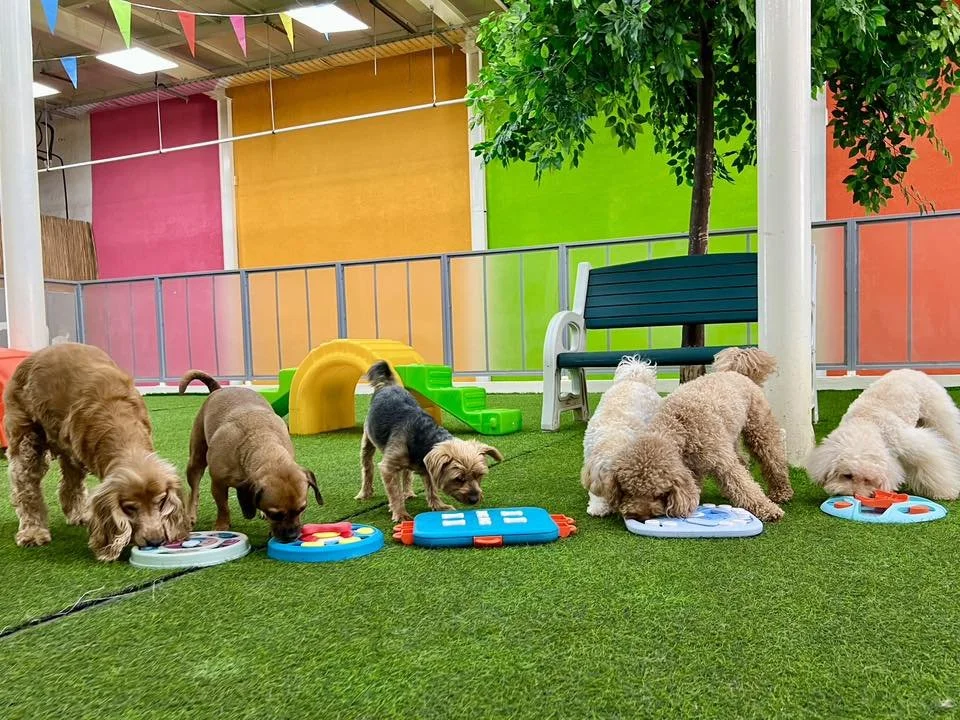
At Fetch, we manage arrivals actively, not just for new dogs working through acclimatisation, but for every dog, every day. When a dog joins their group, staff redirect the existing group before the arrival happens.
The goal is to prevent the group from rushing and overrunning the joiner, which creates an immediately overwhelming social experience regardless of how familiar the dog is with the space. It is a small operational detail that makes a significant difference to how dogs start their day.
Exercise before drop-off, but not to exhaustion
There is a pervasive piece of advice to tire your dog out before daycare so they are calm. This is partially correct and mostly misunderstood. A dog who arrives exhausted is not calm, they are depleted. They are less able to regulate their own responses, less able to read other dogs' signals accurately, and more likely to tip into either shutdown or overreaction.
A moderate walk before drop-off is useful. It provides an outlet for physical energy and creates a familiar routine marker before an unfamiliar event. Driving straight from sleep to drop-off without any movement is a worse start than arriving slightly settled from a walk.
More valuable than the walk, though, is nose work. Scent-based activity, even something as simple as a sniff walk where the dog leads and investigates freely, or a short scatter feed in the garden, activates the seeking system in a way that physical exercise alone does not. It produces a calm, focused state rather than an aroused one. A dog who has had ten minutes of genuine sniffing before drop-off arrives in a measurably different mental state than one who has had a fast-paced run.
If you only have time for one thing before the school run, make it a slow sniff rather than a sprint. We have however designed our program to offer this to our clients who aren’t in a position to do so, offering dogs an individual session before they join their group.
Your own energy at drop-off matters
Dogs read departure anxiety in their guardians reliably. A prolonged, emotionally loaded goodbye signals to the dog that something warrants concern. Keep drop-off calm, brief, and matter-of-fact. This is not about suppressing genuine emotion, it is about not creating a ritual that teaches the dog the moment of departure is worth anxiety.
Palestrini et al. (2010) found that dogs' stress responses were measurably shaped by the conditions of separation, not just the fact of it. A predictable, calm handover is meaningfully different from a fraught one.
What to tell the facility
Tell them everything relevant before the first visit. Not just vaccination history, behaviour history. Does your dog have any known triggers, not only environment, but physical too. Any experiences with other dogs that have been difficult? Any health conditions that affect how they move or interact? Any foods or treats they cannot have?

A facility that does not ask these questions before the first day has not thought seriously about individual needs or consent based care. One that does is more likely to use what you tell them.
What to expect coming home
After the first full day, most dogs sleep. This is normal. What you are looking for is the quality of the tiredness, a dog who is relaxed and sleeps easily is different from a dog who is flat, clingy, or unsettled. The latter can indicate the day was harder than it should have been.
Dietz et al. (2018) note that early negative experiences in group or novel settings can have lasting effects on how dogs respond to similar environments in future. The first few visits set a pattern. If the first day seems to have left your dog worse rather than just tired, that is worth raising with the facility rather than assuming it will settle on its own.
What not to do
Do not drop in repeatedly during the day to check on your dog. It disrupts the settling process. Do not bring a toy or item from home unless the facility has specifically requested it, it can become a resource guarding trigger. Do not extend the trial period indefinitely if the dog is consistently distressed, that is a signal the environment is not right, not a signal to persist.
Howell, King and Bennett (2015) note that the quality of socialisation experiences matters as much as the quantity. A dog who attends ten difficult sessions has not been better socialised than one who attended three good ones. If the first several visits are consistently hard, the right response is to reassess, not push through.
The first day is not the whole story
A dog who struggles on day one may settle well by week three. That is normal. The acclimatisation arc varies, some dogs walk in relaxed from session one, others need longer. What matters is the direction of travel. Gradual improvement is good. No improvement after multiple sessions is information.
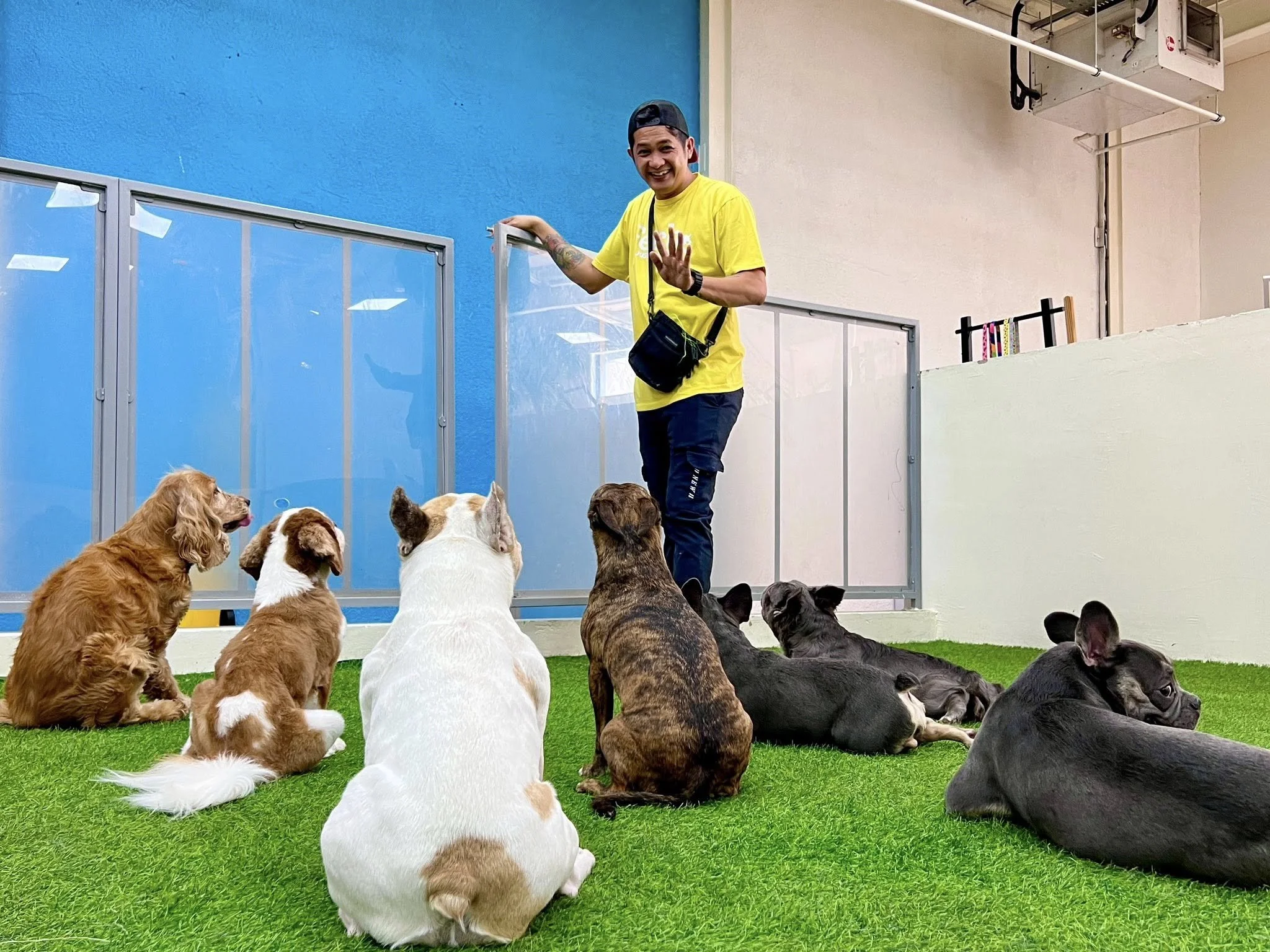
At Fetch, we monitor every dog's progress through acclimatisation and communicate with guardians throughout. If something is not working, we will tell you before you have to ask. When you are ready, join our waitlist.
References
Beerda, B., Schilder, M.B.H., van Hooff, J.A.R.A.M., de Vries, H.W. & Mol, J.A. (2000). Behavioural and hormonal indicators of enduring environmental stress in dogs. Animal Welfare, 9, 49–62. https://doi.org/10.1017/S0962728600022247
Dietz, L., Arnold, A.K., Goerlich-Jansson, V.C. & Vinke, C.M. (2018). The importance of early life experiences for the development of behavioural disorders in domestic dogs. Behaviour, 155(2–3), 83–114. https://doi.org/10.1163/1568539X-00003486
Howell, T.J., King, T. & Bennett, P.C. (2015). Puppy parties and beyond: the role of early age socialization practices on adult dog behavior. Veterinary Medicine: Research and Reports, 6, 143–153. https://doi.org/10.2147/VMRR.S62081 Palestrini, C., Minero, M., Cannas, S., Rossi, E. & Frank, D. (2010). Video analysis of dogs with separation-related behaviors. Applied Animal Behaviour Science, 124(1–2), 61–67. https://doi.org/10.1016/j.applanim.2010.01.014