
What's the Best Age to Enrol Your Puppy in Daycare?
The short answer: earlier than most guardians think, and before full vaccination is complete, provided the facility has appropriate health protocols. Here is why timing matters, and what to look for.
The socialisation window
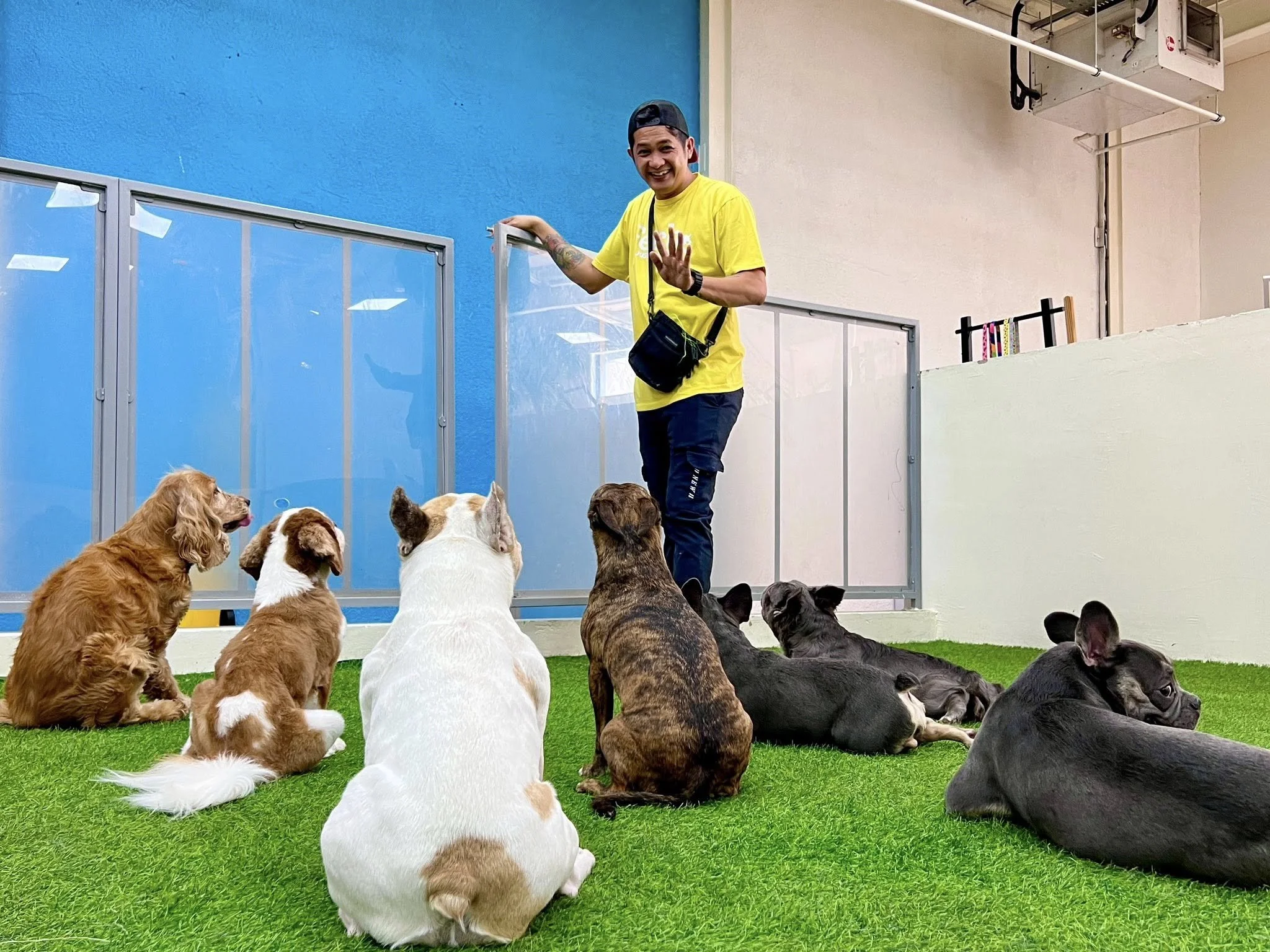
Between approximately three and twelve weeks of age, puppies pass through a sensitive developmental period where the brain is unusually receptive to forming stable associations with the world around them, other dogs, people, surfaces, sounds, and environments. McEvoy, Espinosa, Crump and Arnott (2022) describe this as the period when fear responses to novelty are at their lowest and positive associations form most readily.
After this window closes, socialisation does not end, but the ease of forming positive associations decreases, and fear-based responses to genuinely novel stimuli become more likely. The work done before twelve weeks is disproportionately valuable.
What this means practically
In the UAE, puppies purchased from breeders abroad should legally be at least four months old on arrival. In practice, loopholes mean many arrive between eight and twelve weeks, and if you have adopted from one of the many rescue shelters here, the timeline may be different again. Either way, the socialisation window is already partially elapsed by the time most guardians are thinking about next steps.
There is also a vaccination complication worth knowing about. Puppies who receive vaccines too early, before maternal antibodies have sufficiently declined, often gain no immunity from the dose. A vacci-check (something we require all dogs under 3 years of age, and recommended for all other) will confirm whether your puppy's vaccinations have actually conferred protection, or whether a new course is needed. Discovering this late adds weeks to the timeline and delays socialisation further.
This makes prompt action more important, not less. Waiting until the puppy feels more settled is a common and understandable instinct, and one that frequently works against the dog. Howell, King and Bennett (2015) found that dogs appropriately socialised as puppies are significantly less likely to exhibit fear and aggression as adults. Waiting until four or five months because it feels safer is often the wrong calculation. The risk of undersocialisation is real and lasting.
The vaccination question
The most common reason guardians delay is vaccination status. The concern is legitimate, but the American Veterinary Society of Animal Behaviour has long held that the risks of undersocialisation outweigh the infectious disease risks of well-managed socialisation environments before vaccination is complete.
The key phrase is well-managed. A facility with clear health protocols, documented vaccination requirements, clean environments, monitored introductions, is a meaningfully lower risk than a public dog park. If the daycare you are considering cannot clearly articulate their health requirements, that is information worth acting on.
Breed differences
Morrow et al. (2015) found significant breed variation in the onset of fear-related avoidance behaviour in puppies, the window does not close at the same age for every breed. Guardians of breeds with earlier onset of fearfulness have less time than they think. This is worth a conversation with your vet and fear-free certified behaviourist, particularly for breeds with known anxiety or reactivity profiles.
What early daycare should look like
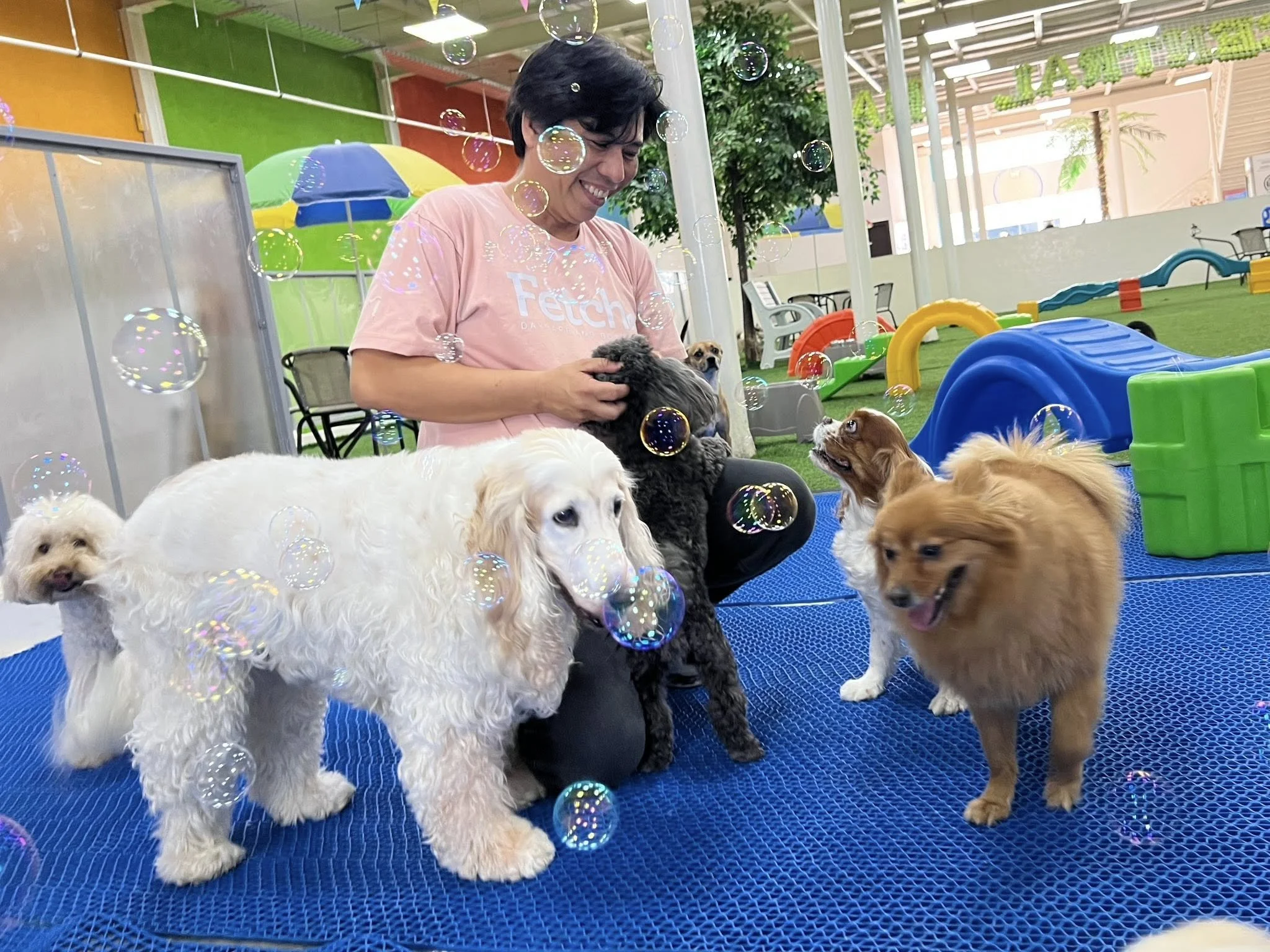
For a young puppy, daycare should not look like adult daycare. Sessions should be shorter. Introductions to other dogs should be carefully managed, not a free-for-all. Rest must be generous.
Dietz et al. (2018) found that early group experiences exceeding a puppy's coping capacity can produce lasting negative associations with similar environments. An overwhelmed puppy is not being socialised, they are being flooded, and the outcomes are very different.
Ask any facility specifically what puppy sessions look like and how they differ from adult sessions. If the answer is that they do not differ, that tells you what you need to know.
After twelve weeks
Socialisation does not stop, and daycare remains valuable past the sensitive period. For dogs who missed significant early socialisation, gradual exposure with strongly positive associations is the approach, not immersion. For well-socialised puppies, ongoing experience maintains and reinforces what was built early.
If you are unsure whether your puppy is at the right point, contact us. We will tell you honestly.
References
Dietz, L., Arnold, A.K., Goerlich-Jansson, V.C. & Vinke, C.M. (2018). The importance of early life experiences for the development of behavioural disorders in domestic dogs. Behaviour, 155(2–3), 83–114. https://doi.org/10.1163/1568539X-00003486
Howell, T.J., King, T. & Bennett, P.C. (2015). Puppy parties and beyond: the role of early age socialization practices on adult dog behavior. Veterinary Medicine: Research and Reports, 6, 143–153. https://doi.org/10.2147/VMRR.S62081
McEvoy, V., Espinosa, U.B., Crump, A. & Arnott, G. (2022). Canine socialisation: a narrative systematic review. Animals, 12(21), 2895. https://doi.org/10.3390/ani12212895
Morrow, M., Ottobre, J., Ottobre, A., Neville, P., St-Pierre, N., Dreschel, N. & Pate, J.L. (2015). Breed-dependent differences in the onset of fear-related avoidance behavior in puppies. Journal of Veterinary Behavior, 10(4), 286–294. https://doi.org/10.1016/j.jveb.2015.03.002