
Dog Parks in Dubai, The Risks Nobody Talks About
Public dog parks have a pleasant premise. A space where dogs can run free and be dogs. And for some dogs in some contexts, they work fine. But they carry risks that most guardians do not fully account for, and the parks themselves have no mechanism to address.
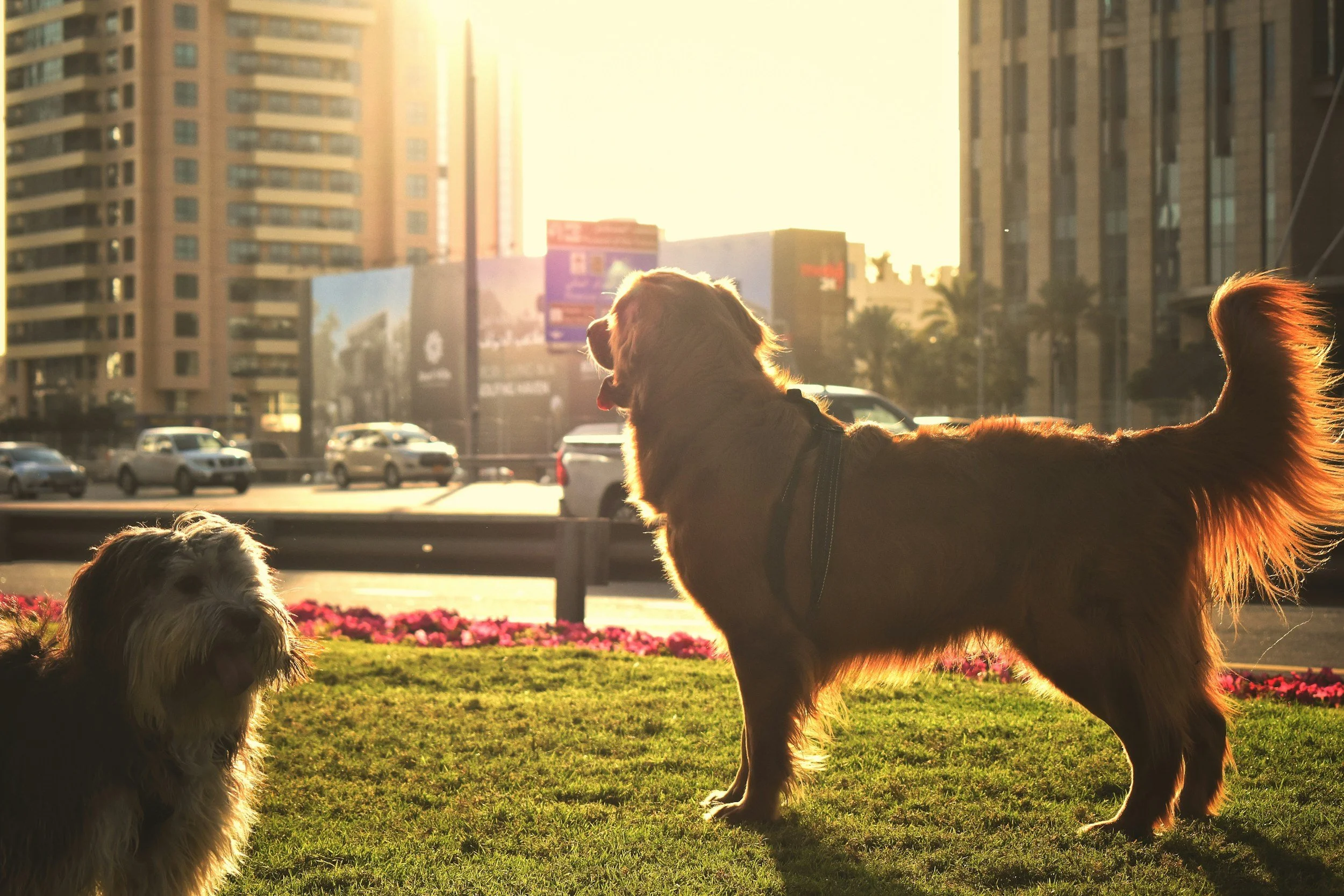
The uncontrolled introduction problem
In a well-managed group setting, dogs are introduced gradually, matched by temperament and energy level, and supervised by people trained to read canine body language. In a public park, your dog walks through a gate and is immediately surrounded by unknown dogs at full arousal.
For a confident, socially robust dog, that might be fine. For a dog who is selective, anxious, or still building confidence, it can be genuinely damaging. And the damage is not always obvious in the moment. A dog who gets overwhelmed and shuts down, who has a tense but not overtly conflictual interaction, who spends the whole session trying to avoid rather than engage — none of that looks like a problem from a distance. But the cumulative effect of repeated negative social experiences during sensitive developmental windows is well-documented in recent canine socialisation research (Crump and Arnott, 2022).
Vaccination status
There is no verification at a public dog park. No intake process, no vaccination requirement, no one checking that every dog present has a current kennel cough vaccination. Kennel cough (Bordetella bronchiseptica) spreads in exactly the high-dog-density, high-excitement environments that public parks create. Canine influenza, parvovirus, and giardia are transmitted through contact with infected dogs or contaminated surfaces. Public parks, by their nature, concentrate dogs from different environments with no health screening. The risk is not theoretical.
The arousal problem
Dog parks tend to run at a sustained high arousal level. Dogs arrive excited, the environment is stimulating, there is little structure, and there is often no mechanism to de-escalate when arousal spikes. Research into inhibitory control in dogs shows that dogs exhibiting higher arousal and reactivity also show impaired self-control — which helps explain why social friction tends to cluster in high-stimulation, unmanaged environments (Gobbo and Zupan Šemrov, 2022).
What supervised socialisation actually looks like
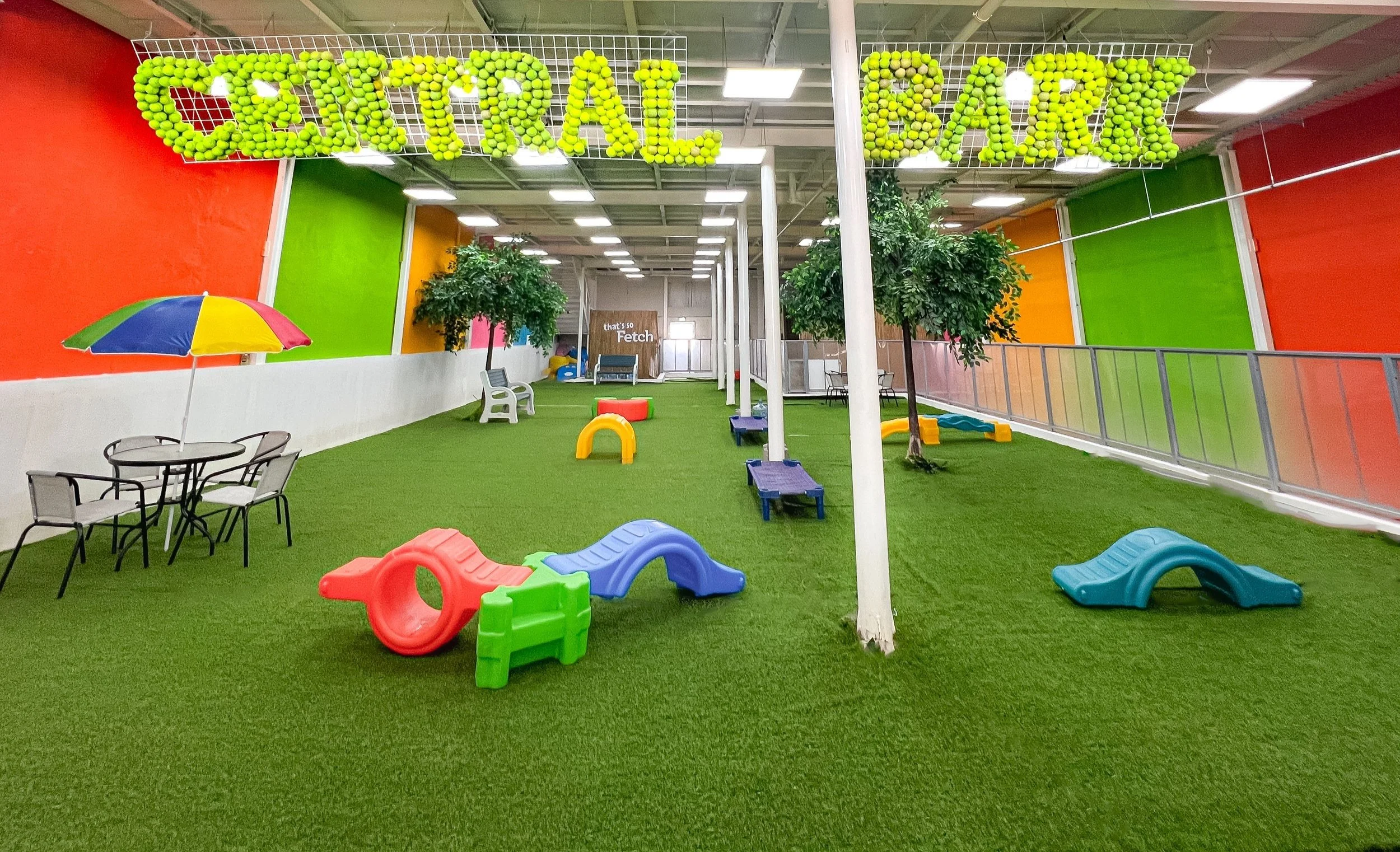
The alternative to public park socialisation is not no socialisation. It is controlled socialisation: carefully matched introductions, supervised play, the ability to intervene before things go wrong, and a managed arousal environment that gives dogs positive experiences without pushing them past their threshold.
Central Bark by Fetch Dubai is built around exactly this model. Guardian-present sessions, small groups matched by temperament and social style, Fetch handlers on the floor reading body language, and a climate-controlled indoor environment that works year-round in Dubai. Dogs get the genuine social experience public parks promise, with the structure and management that makes it actually good for them.
Central Bark is opening to visitor sessions soon. If you want to be among the first to book, join the Fetch waitlist.
Interested in Central Bark?
Guardian-present, temperament-matched, and a controlled environment that public parks cannot offer. Join the waitlist to be among the first to hear when visitor sessions open.
References
Crump, A. and Arnott, G. (2022). Canine socialisation: a narrative systematic review. Animals, 12(21), 2895. https://doi.org/10.3390/ani12212895
Gobbo, E. and Zupan Šemrov, M. (2022). Dogs exhibiting high levels of aggressive reactivity show impaired self-control abilities. Frontiers in Veterinary Science, 9, 869068. https://doi.org/10.3389/fvets.2022.869068